
Degree Programs & Offerings
Undergraduate Program
The undergraduate program provides students with an education that is unique in its depth, provides access to faculty, and offers an extraordinary range of educational opportunities beginning in freshman year. Get DetailsCombined BS/MS Degree
Earn a BS in Civil Engineering and a Master of Science in Engineering (MSE) in Civil Engineering from Johns Hopkins in five years total. Learn MoreMSE in Civil Engineering
The master’s degree in civil engineering focuses on mechanics of materials, probabilistic methods, fire engineering, earthquake engineering, infrastructure design for resilience. Learn MoreMS in Systems Engineering
The master's degree in systems engineering focuses on network and mathematical modeling, optimization, analysis of complex infrastructure systems, public health, and urban resilience. Learn MorePhD Program
Seek out—and solve—high-impact challenges related to the built environment. Research in this area includes: structural engineering, structural mechanics, probabilistic methods, hazards management, and systems engineering. Learn More
Kristen Corlay receives a Disney Data & Analytics Women of 2022 Award
Civil and Systems Engineering undergraduate student Kristen Corlay receives a Disney Data & Analytics Women of 2022 Award and presents her work at the Disney Data & Analytics Conference at Disney World in Orlando.
Grand Societal Challenges
Rooted in fundamental mechanics, systems thinking, advanced computational methods and uncertainty quantification, our programs successfully navigate the conflicting objectives inherent in addressing the following grand societal challenges:

Resilient Cities - Creating more resilient cities by enhancing earthquake resistance of structures, using systems-based solutions to address food insecurity, and developing new materials and structures for improved fire safety. More
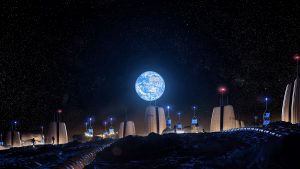
Space Exploration & Habitation - Develop technology that will support long-term exploration and inhabitation of space, including optimized ultra-lightweight materials, cutting-edge computational mechanics, and systems-based approaches to community design. More

Decision-Making & Health - Leverage systems modeling, modern analysis, and advanced optimization to help transform data into decisions that will ensure healthy and more equitable communities. More

Human Safety & Security - Improve technologies, policies, and infrastructure that are robust to evolving threats – from changing climate, to acts of war, to global pandemics. More

Future Energy Infrastructure - Find mechanics-based solutions, create structural engineering advances, and use systems-based planning to address the changing energy supply, aging distribution networks, dynamic markets, and increasing hazards. More
Focus Areas
Mechanics of Materials
Collaborate on research of significant interest to aerospace, automotive, defense, manufacturing, materials, biomedical and electronics industries by using computational and experimental modeling, machine learning, topology optimization, and material design. DetailsStructures
Find solutions for structures that optimize, overcome uncertainty, and provide resilience and extreme efficiency under a variety of hazards. DetailsSystems
Ensure that society can recover from threats by connecting mathematics, engineering, social and physical sciences and medicine. Details
Learn from faculty who are defining their fields.
Our world-renowned faculty are mentors and teachers, dedicated to providing students with the knowledge and experiences needed to graduate as leaders--no matter what professional path they choose.
-

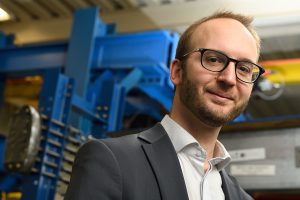
Gernay’s project aims to advance the knowledge of cold-formed steel structures’ post-earthquake fire performance
-

International Team Including Johns Hopkins Experts Makes Excess Deaths Projections in Gaza
CategoriesJohns Hopkins civil and systems engineering professor Tak Igusa explains how the research team modeled projections of future casualties from trauma, infectious diseases, and other factors in Gaza
-
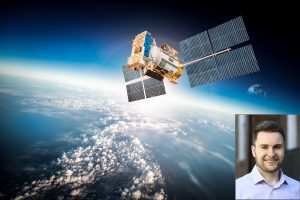
CaSE Does Space
CategoriesAssistant Professor Jochen Mueller's grant continues department’s involvement in developing technology to support exploration and habitation in space